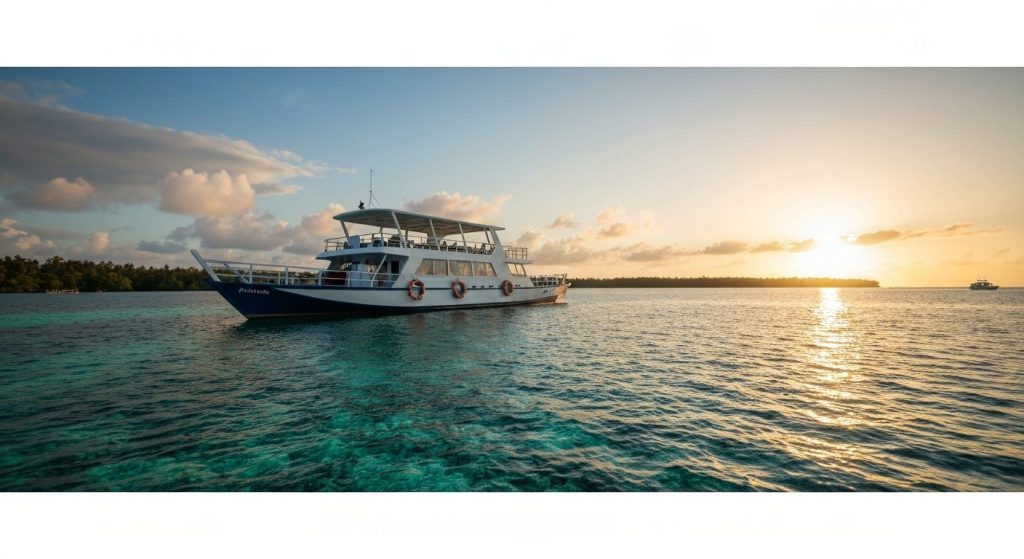
Raja Ampat Liveaboard Charter
The direct-booking charter authority for Raja Ampat liveaboards: an honest planning guide backed by a real Sorong/Waisai-based operator’s own crewed fleet, for private and scheduled luxury cruises acr.
Choose Your Voyage
Hand-planned options for every kind of traveller — explore, then enquire directly.
Own crewed fleet
Luxury Raja Ampat operates its own crewed fleet; certain larger vessels are arranged via vetted, disclosed partners.
Book direct — no markup
Reservations are handled directly by the Luxury Raja Ampat team, not a third-party aggregator.
Transparent pricing
Clear, indicative rates and exactly what is included — no hidden surprises.
Local since 2015
Luxury Raja Ampat is based in Sorong, West Papua and knows these waters, seasons and crews first-hand.
Where You'll Sail
Signature stops on a typical itinerary.
Plan Your Trip
Tell us your dates and party size — our team replies personally, usually within hours.
A Raja Ampat liveaboard charter is a crewed multi-day diving cruise across West Papua's Coral Triangle, arranged by Luxury Raja Ampat. Trips run 7-12 nights, departing Sorong, and typically include cabin, full board, 3-4 guided dives daily, tanks and transfers. Per-cabin berths start from ~US$2,800; whole-boat private charters from ~US$24,000. Best season is October-April.
Raja Ampat liveaboard charter means hiring a crewed boat as your moving base to explore the reefs and islands of Raja Ampat, overnighting at sea instead of on land. On this page we explain how Raja Ampat liveaboards work from Sorong, what an honest charter costs, how our own boats operate, and how to choose the right trip for your group or cabin-by-cabin booking.
We are Luxury Raja Ampat Liveaboard Charter, a Sorong- and Waisai-based operator active since 2015. Our core work is simple: we own and operate a small fleet of crewed liveaboards in Raja Ampat, then arrange private whole-boat charters and scheduled cabin trips across the Dampier Strait, Misool, Piaynemo, Wayag and the central reefs.
You deal with one team on the ground, not a distant reseller. We are very clear about what we run directly and what we arrange through vetted local partners. No hype, no artificial scarcity — just straight answers so you can decide what fits.
—
## How Raja Ampat liveaboard charter works
A Raja Ampat liveaboard charter is usually one of two things:
1. **Private full-boat charter** – you reserve the whole boat, set your dates (within weather and logistics limits), and shape the itinerary with our team.
2. **Cabin-based liveaboard booking** – you reserve one or more cabins on a scheduled departure and share the boat with other guests.
Both options use the same basic model: sleep on board, move between areas overnight, and wake up close to the next dive, snorkel or island stop. Sorong (SOQ) is the primary gateway; Waisai is the second hub for shorter Raja Ampat charter routes inside the Dampier Strait.
Typical Raja Ampat liveaboard itineraries we operate or arrange run **6–12 nights**, cover **150–400 nautical miles**, and take in some mix of:
– Dampier Strait (Mioskon, Cape Kri, Blue Magic, Arborek)
– Central / Fam / Piaynemo reefs
– Misool Marine Reserve
– The far north – Wayag, Kawe and adjacent islands
Every itinerary is tide-, swell- and permit-dependent. Wildlife is never guaranteed. Manta rays at Manta Sandy, currents at Cape Kri, and visibility at Blue Magic all shift by moon phase, season and even hour. Your cruise director and dive guides will adjust the plan daily; what you see here is a planning baseline, not a fixed promise.
—
## Our role: own liveaboards vs partner vessels & resorts
To keep this honest and useful, here is how we operate in Raja Ampat:
– **We own and operate** a small Sorong- and Waisai-based fleet of crewed liveaboards and day boats. These include traditional Indonesian wooden vessels (often referred to generically as *Raja Ampat phinisi* style) and smaller modern-hull boats.
– **We directly manage**: routes, dive planning, crew, catering, and maintenance on our own vessels. You sign our charter contract, pay into our accounts, and deal with our Sorong office pre-departure.
– **We also arrange** larger Raja Ampat luxury liveaboard vessels and some resort stays through long-standing partner operators. These are separate companies with their own management, boats and staff.
– **Referral transparency:** if you choose to proceed with one of our partner liveaboards or a resort stay that we’ve recommended, they may pay us a referral fee at no extra cost to you. No one can pay to change what we publish.
On this page, any time we say “our own boats” we mean vessels where the crew and cruise director report into our local team. Any time we mention “partner vessels” or “partner resorts”, we mean operations we trust and book regularly, but do not own.
If you want to confirm which option a particular quote falls under, ask us directly via email or WhatsApp and we’ll be explicit before you pay a deposit.
—
## Typical Raja Ampat liveaboard itineraries
Raja Ampat is large. The area commonly described for liveaboard diving stretches over **40,000+ square kilometers** of reefs, islets and channels. No single trip can “do it all”, so your Raja Ampat liveaboard itinerary has to prioritise.
Below is an overview of the main route styles we run or arrange, plus who they tend to suit. Every charter is customised, but these give you realistic patterns and durations.
### Dampier Strait & Central Raja Ampat (6–8 nights)
This is the core **Sorong Raja Ampat liveaboard** route and the most flexible charter option for mixed groups.
Core areas and highlights often include:
– **Mioskon & Friwen area** – classic reef dives, fish-rich and suitable for a broad range of experience levels in calm conditions.
– **Cape Kri** – fast currents at times, big fish potential; a benchmark site for advanced divers comfortable with drift diving.
– **Blue Magic** – seamount that can have schooling fish and pelagic visitors; current-sensitive and typically recommended for experienced divers.
– **Manta Sandy / Manta Ridge** – cleaning stations visited by reef mantas seasonally; visitation depends on plankton, current and luck. Never guaranteed.
– **Piaynemo / Fam Islands** – iconic limestone formations, shallow reefs for snorkelling, plus a short but steep viewpoint hike.
– **Arborek** – village jetty dives and snorkelling, strong chance of schooling fish and macro; also good for surface-interval village visits.
Who it suits:
– Divers with **Advanced Open Water** or equivalent and **20–50+ logged dives**.
– Active snorkellers happy with surface currents, using lifejackets and boat support.
– Families and mixed groups – it’s the easiest to adjust day by day for energy and comfort levels.
Typical duration: **6–8 nights**.
Departure/return: Sorong or Waisai.
### Misool-focused Raja Ampat charter (8–12 nights)
Misool in the south is a privately managed marine reserve, reachable only by boat. It’s famous for dense reef life, soft corals and good chances of reef mantas from roughly October–March, though plankton, visibility and animal behaviour vary day to day.
Core zones you may visit:
– **Daram, Boo, Fiabacet chains** – rich reefs with overhangs, swim-throughs and colourful soft coral gardens in the right conditions.
– **Magic Mountain** – well-known seamount; currents can be strong and descents controlled, typically appropriate for confident, current-ready divers.
– **Wayil & nearby bays** – protected anchorages with shallower sites and mangrove-fringed bays that can be ideal for snorkelling on calmer days.
Misool trips require longer crossings (often **90–120 nautical miles** each way from Sorong / Dampier), which means more overnight transits than a purely central route.
Best for:
– Certified divers with **Advanced** plus **30–75+ dives**, good buoyancy and comfort in current.
– Photographers interested in wide-angle reef scenes and big fish aggregations.
Typical duration: **8–12 nights**.
Departure/return: Sorong. Some trips do a loop via Dampier; others focus almost entirely on Misool.
### Wayag, Kawe & North Raja Ampat (8–12 nights)
The far north is about sculpted karst islands, remote beaches and broad panoramas, plus reefs that can be excellent for both diving and snorkelling when currents line up.
Common features:
– **Wayag** – protected bays and ridges; the main ridge hike is steep and hot but short (often **20–40 minutes** up depending on pace).
– **Kawe & Eagle Rock area** – mix of reef and possible manta encounters; current-sensitive and requires careful timing.
– **Equator crossings** – some routes cross the equator line, a fun but symbolic waypoint.
This kind of Raja Ampat boat charter is more weather-sensitive because of open-water transits along the west of Waigeo. Operators will typically avoid committing to the far north if forecasts point to rough conditions on your dates.
Typical duration: **8–12 nights**.
Departure/return: Sorong, usually via Dampier Strait in at least one direction.
### Combination routes (10–12+ nights)
For groups with both time and budget, combined routes link:
– Dampier Strait
– Central/Fam
– Misool
– Sometimes a taste of the north
These are the most complex charters to plan because you’re covering **300–450 nautical miles** over **10–12 nights**, balancing crossings against time on site. They work well for:
– Strong, experienced dive groups
– Private Raja Ampat luxury liveaboard charters for family gatherings, photo clubs or friends who may not return soon
If you want to explore this level of route complexity, it’s usually best to plan your trip with us over WhatsApp or a call so we can layer in tides, monsoon patterns and your group’s experience levels.
—
## Dive conditions, skills & safety: honest guidance
My role on board is to track the underwater half of each cruise: visibility, currents, depth profiles, and how the group actually feels in the water. The following is planning guidance, not a substitute for your dive professional’s briefing; your cruise director and guides have the final say site by site.
### Training level and dive numbers
For Raja Ampat dive liveaboard trips, the most common minimums requested by Indonesian operators are:
– **Open Water** with some recent dives – may be accepted on easier routes with a private guide, but often restricted away from the stronger-current sites.
– **Advanced Open Water (or equivalent)** – strongly preferred; more or less standard on most full Raja Ampat liveaboards.
– **Number of dives** – many boats suggest **20–50+ logged dives** as a minimum, but guides will pay more attention to your recent experience and actual comfort in current than the number in your logbook.
If you’re on the lower side of experience, a central Dampier-based Raja Ampat liveaboard itinerary is usually more adaptable than a heavy Misool or far-north focus.
### Currents
Raja Ampat is about moving water. That’s what fuels the biomass. It also means:
– **Drift dives are common** – sometimes gentle, sometimes fast.
– Sites like **Cape Kri, Blue Magic, Sardine Reef, Magic Mountain** can all run strong on certain tides.
– **Negative entries** and rapid descents are used at times on advanced sites to get divers out of the surface layer quickly.
If you are not comfortable with negative entries, SMB use, or surfacing away from the main reef to be picked up by the tender, tell the team clearly on day one. Good operations can adjust your dive plan, shift you to more sheltered spots or add extra guides; bad surprises are what we aim to avoid.
### Visibility & water temperature
Typically:
– **Visibility**: often **15–30 m** in many areas, but can drop below **10 m** during plankton peaks, rain systems or inshore mixing.
– **Water temperature**: roughly **27–30°C** in most seasons. Some thermoclines, especially near upwellings, can drop temperatures a few degrees on certain dives.
A 3 mm full suit is enough for most, but photographers and those who get cold over repetitive dives may prefer a 5 mm or layered approach.
### Nitrox & equipment
Most proper Raja Ampat liveaboards – including the vessels we run and our main dive partners – supply:
– Nitrox (generally **30–32%**) for certified divers
– 12 L aluminium tanks as standard; 15 L or steel tanks on request on some boats
– Rental gear (BCD, regulator, wetsuit, computer, etc.) booked in advance
If you are not Nitrox-certified yet, consider doing the theory before your trip and finishing the practical side on board (if offered), as repetitive diving on air can mean shorter bottom times.
—
## Indicative Raja Ampat liveaboard cost (last verified June 2026)
Costs vary widely by boat size, level of service, date and route. What follows are **indicative price ranges**, not fixed quotes; always confirm current rates before you commit.
### Per-person cabin bookings
For scheduled Raja Ampat liveaboard trips on a shared vessel, cabin prices for **7–10 nights** commonly fall into:
- Comfortable mid-range liveaboard
- Roughly **US$2,400–4,500 per person** for 7–10 nights, twin-share, full board, diving included (indicative, varies by season and vessel).
- Higher-end Raja Ampat luxury liveaboard
- Typically **US$4,800–7,500+ per person** for 7–10 nights, twin or double share, with more space, service and sometimes included local flights or spa (indicative; check specific inclusions).
These figures generally cover: accommodation, meals, guided diving, tea/coffee/water, tanks and weights. They do **not** usually include: international or domestic flights, alcohol, gear rental, marine park permits, fuel surcharges, crew tips, or optional land tours.
### Private Raja Ampat boat charter (whole-boat)
Chartering a full boat for your own group is more about total trip cost than per-person rates. For **6–10 nights**, whole-boat Raja Ampat private charters we run or arrange typically fall into:
– Smaller vessels for **4–8 guests**: around **US$18,000–40,000** total for 6–10 nights (indicative, last verified June 2026).
– Larger phinisi-style Raja Ampat charter yachts for **8–16+ guests**: roughly **US$38,000–90,000+** for 7–10 nights, depending on size, finish level, and season (again, indicative ranges).
These wide bands reflect different vessel ages, fit-out levels, inclusions and routes. A simple dive-focused charter inside Dampier with short crossings costs less in fuel and time than a long Misool–Wayag loop.
If you share these numbers with our reservations team along with your target trip length and group size, we can usually narrow your realistic options quickly via WhatsApp and then detail it in writing.
—
## Marine park permits & Raja Ampat regulations
Raja Ampat is a protected marine park managed by the local regency and conservation partners. All non-resident visitors need a **Raja Ampat Marine Park permit**, normally valid for **12 months**.
### Raja Ampat Marine Park permit (last verified June 2026)
Fees change periodically; the **ranges below are indicative only** and you must confirm current rates before travel:
– **Foreign visitor permit**: often in the region of **US$90–150 per person** for the year, depending on the IDR exchange rate and current local regulation.
– **Indonesian citizen permit**: typically lower, but still required.
For liveaboard guests, the process usually works like this:
– For our own liveaboards, **we handle the permit process** as part of pre-trip admin; you pay the fee, we purchase the permit on your behalf.
– For partner vessels, they usually include the permit in their own package or as an add-on line item; we’ll clarify that in your quote.
Keep a copy of the permit (or digital proof) during your time in the park. Checks can happen at main harbours or ranger posts.
### Other fees & regulations
– **Port & mooring fees** – some itineraries include local mooring charges or harbour fees; these are usually folded into your charter or liveaboard cost.
– **No-take zones & speed limits** – Misool Marine Reserve and some other areas have their own additional regulations, including no-fishing zones and reduced speed limits near sensitive sites.
– **Drones** – use is sometimes regulated or restricted around villages and certain conservation zones; ask your cruise director before flying.
None of these rules are there to make your life difficult; they exist to keep Raja Ampat from becoming another over-pressured destination. Respecting them is part of the deal.
—
## Sorong / Waisai logistics: getting on board
Most Raja Ampat liveaboard bookings will start and end in **Sorong**, the main city and port on West Papua’s Bird’s Head Peninsula. Waisai, on Waigeo Island, is the regional capital of Raja Ampat and a secondary hub.
### Getting to Sorong (SOQ)
There are no direct international flights to Sorong. Typical routes as of 2026 use:
– **Jakarta (CGK)**
– **Makassar (UPG)**
– **Manado (MDC)**
Domestic schedules and airlines change frequently. Many guests choose to overnight in Jakarta or Makassar on the way in to buffer against delays.
We can connect you with local agents who stay current on flight patterns, but we do not control or guarantee airline operations. Always allow margins, especially during the wet-season months when weather disruption is more common.
### Sorong–Waisai ferry
Some shorter Raja Ampat charters and resort stays use the **public fast ferry between Sorong and Waisai**, which takes about **2–2.5 hours** across the Dampier Strait.
– Operators often use this to move guests to/from central Raja Ampat more efficiently.
– Tickets are modestly priced in IDR; schedules vary by season and day of week.
If your itinerary uses the ferry, our team or your partner resort will normally coordinate transfers between the airport, harbour and your vessel or hotel.
### Pre- and post-trip nights
We strongly recommend:
– **Arriving in Sorong at least one day before embarkation**, especially for morning or early-afternoon boarding.
– **No-fly buffer** after a full dive itinerary – at least **18–24 hours** since your last dive before your domestic flight, in line with standard dive safety guidelines.
Sorong has a growing selection of hotels in different price ranges. For higher-end pre/post stays actually in Raja Ampat, we work with a handful of partner resorts who can host you either side of a liveaboard; if you proceed with a partner they may pay us a referral fee at no extra cost to you.
—
## Choosing the right Raja Ampat liveaboard for you
Below is a simple comparison to help you weigh cabin-based liveaboard bookings against a private Raja Ampat boat charter.
| Option | Best for | Group size | Typical duration | Indicative cost (last verified June 2026) |
|---|---|---|---|---|
| Cabin on shared liveaboard | Solo travellers, couples, small groups happy to share | 1–4 guests | 7–10 nights | ~US$2,400–7,500 per person depending on vessel/season |
| Private charter – smaller boat | Families or friend groups wanting privacy & flexible schedule | 4–8 guests | 6–10 nights | ~US$18,000–40,000 total per charter |
| Private charter – larger phinisi | Big families, celebrations, clubs or corporate retreats | 8–16+ guests | 7–12 nights | ~US$38,000–90,000+ total per charter |
If your party is **6–10 people**, it’s often more cost-effective (and more flexible) to take a private Raja Ampat charter than to book multiple cabins on a scheduled Raja Ampat liveaboard. For 1–4 people, cabin bookings usually make more financial sense.
For mixed groups with non-divers, we usually suggest:
– Central / Dampier routes with plenty of snorkel-friendly sites
– At least a couple of relaxed beach or village visits
– Avoiding overly aggressive 4-dive-per-day schedules so everyone enjoys the pace
This level of tailoring is easiest if you plan your trip with our team directly. WhatsApp works well for sharing group profiles, certification cards and even short videos of people in the water so we can give grounded advice.
—
## Best time for Raja Ampat liveaboard trips
You can dive Raja Ampat year-round, but the character of trips, wind exposure and typical itineraries shift across the calendar.
### Broad seasonal patterns
– **October–April**
– Often considered the “classic” Raja Ampat liveaboard season.
– Many boats base in Raja Ampat during these months.
– Misool routes are especially common from roughly November–March.
– Seas in the southern area can be friendlier, though storms can still pass through.
– **May–September**
– Fewer boats, more focus on Dampier Strait and central/northern Raja Ampat.
– Some operators move to other parts of Indonesia during this period.
– You can still have very good diving; the main shift is wind patterns and how easy it is logistically to run southern routes.
These are generalisations, not promises. Visibility, swell and rain can be good or bad in any given month; climate patterns in the region have been variable in recent years.
If you tell us your fixed vacation dates first, we’ll be transparent about which parts of Raja Ampat are realistically on the table and which would be a stretch for liveaboard diving Indonesia-wide on those dates.
—
## How our Raja Ampat liveaboard booking process works
We keep the process simple and direct. Here is what to expect if you decide to work with us:
1. **Initial outline**
– You reach out via email or WhatsApp, ideally with approximate dates, group size, and diver/non-diver split.
– We reply with a small set of realistic route and boat options (our fleet + partners where appropriate), including indicative Raja Ampat liveaboard cost bands.
2. **Refinement**
– We discuss your priorities: more Misool vs more Wayag, more dives vs more island time, kid ages, anniversaries or honeymoons, etc.
– You choose between cabin-based Raja Ampat liveaboard options, or a Raja Ampat private charter if your group is big enough and dates align.
3. **Formal quote & holds**
– For our own vessels, we issue a detailed written proposal with inclusions, exclusions, payment schedule and conditions.
– For partner vessels, we request a hold on your dates and pass you their confirmed pricing; if you proceed with a partner they may pay us a referral fee at no extra cost to you.
4. **Deposit & paperwork**
– You pay a deposit by bank transfer or other available method as outlined.
– We collect passport and certification details, plus any special requirements (gear rental, dietary notes, medical declarations where needed).
5. **Pre-trip updates**
– Closer to departure, we reconfirm domestic flight times, Sorong/Waisai meeting points and any last-minute operational tweaks.
– Your cruise director receives your group profile in advance to adjust dive pacing and briefings.
Throughout, your primary contact remains our reservations team in Sorong/Waisai. For more complex charters, I’ll often join part of the pre-trip planning directly to stress-test itineraries against seasons and likely conditions.
If you’re ready to start shaping dates, you can plan your trip with us and continue the conversation over WhatsApp for faster back-and-forth.
—
## FAQs
How far in advance should I book a Raja Ampat liveaboard charter?
For private Raja Ampat charter bookings in peak months (roughly November–March), securing your dates **9–18 months** ahead is common, especially for larger groups. For cabin-based Raja Ampat liveaboard bookings, you can sometimes find space closer in, but popular dates around Christmas, New Year and Asian school holidays often fill a year ahead. Our advice: as soon as you know your window, contact us so we can show you what’s actually available rather than guess.
Is Raja Ampat suitable for beginner divers?
Parts of Raja Ampat are suitable for newer divers, especially in sheltered bays and shallower reefs. However, many of the flagship sites involve current, downwellings or more complex navigation, so most liveaboard operators prefer divers with Advanced certification and at least **20–30 logged dives**. If your group includes true beginners, we usually suggest a charter with a flexible itinerary focusing on calmer Dampier sites, plus the option for extra private guiding.
Can non-divers enjoy a Raja Ampat liveaboard?
Yes, as long as the itinerary is chosen with them in mind. Non-divers can snorkel (with boat and guide support where conditions allow), join village visits, viewpoints and beach walks, read on deck and enjoy the scenery. For a mixed group, we typically design a schedule with no more than **3 dives per day** and more surface-interval activities, instead of an intense 4-dive-per-day programme.
Are manta rays and other wildlife guaranteed?
No. Raja Ampat has high biodiversity and many sites with a history of manta visits, schooling fish and healthy reefs, but ocean life does not run on a timetable. Current strength, plankton, temperature and local conditions all affect sightings. Our job is to put you in the right kinds of places at the right kinds of times; nature does the rest on its own terms.
What should I budget beyond the liveaboard cost?
Beyond your core Raja Ampat liveaboard booking or charter fee, plan for: international and domestic flights to Sorong, the Raja Ampat Marine Park permit, possible fuel surcharges, gear rental if needed, hotel nights before/after, crew tips, alcohol, and any optional land tours outside the standard plan. For many guests, these extras can add **20–40%** on top of the base trip price, depending on choices and flight routes. We can help you map a realistic ballpark before you commit.