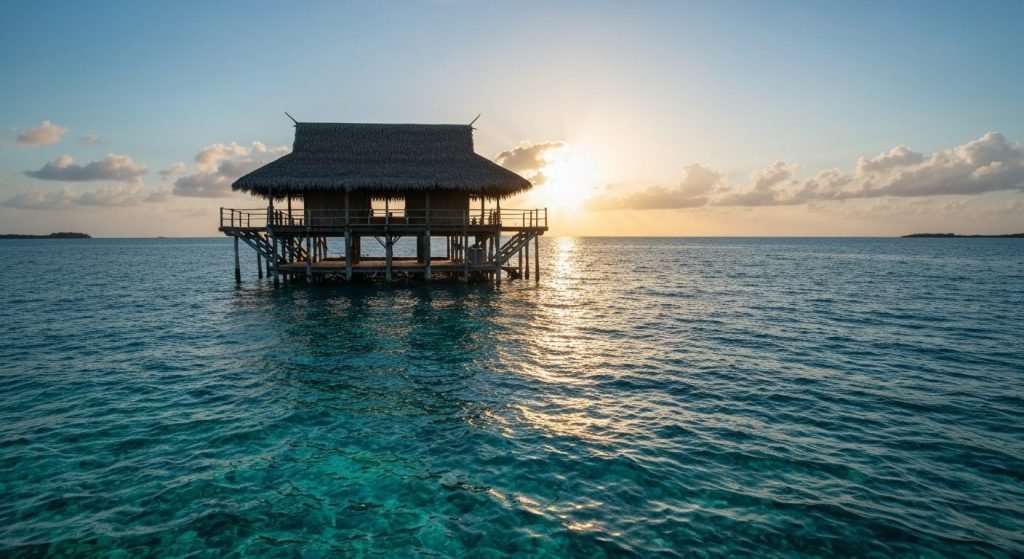
Raja Ampat liveaboard cost in 2026 usually runs from around US$250–750 per person per day, depending on cabin class, season and vessel. That range covers both scheduled cabin trips and private charters across Misool, Dampier Strait, Piaynemo and Wayag.
I’m Maris, and I coordinate itineraries and pricing here at Luxury Raja Ampat Liveaboard Charter in Sorong and Waisai. My goal with this page is simple: to turn “I have no idea what this should cost” into “I understand the price, and I know what to ask next.”
All figures below are indicative planning ranges, last verified June 2026. Actual raja ampat liveaboard prices vary by vessel, season, length of trip and group size, and are only confirmed in a written quote from us or a partner operator.
—
How much does a Raja Ampat liveaboard cost in 2026?
For a typical 7–10 night cruise, most guests should expect:
– **Scheduled liveaboard cabin trips**
– **Standard / lower-deck cabins:** roughly **US$250–400 per person per day**
– **Deluxe / upper-deck cabins:** roughly **US$350–550 per person per day**
– **Suites / master cabins:** roughly **US$450–750 per person per day**
– **Private whole-boat charter prices** for 8–16 guests
– Smaller dive yachts & compact phinisi: **~US$3,000–5,500 per night**
– Classic 6–8 cabin phinisi: **~US$5,500–10,000 per night**
– High-end phinisi (more space, higher service ratios): **~US$9,000–16,000+ per night**
Those ranges typically include full board (meals), guided diving or snorkelling, fuel for a standard Raja Ampat route and use of tenders. They do **not** include the Raja Ampat marine park permit fee cost (currently around **IDR 1,000,000–1,500,000 per person** depending on nationality), nor gratuities, alcohol, and some extras like gear rental or nitrox.
You’ll see some raja ampat liveaboard prices quoted as a flat package (for example “10 nights from US$4,200 per person”). Under the hood, operators are still working off a **per-person-per-night base**, plus surcharges.
—
Cabin classes explained: what you actually get for your money
On most Raja Ampat liveaboards, raja ampat cabin price is driven first by **cabin class and deck position**, then by season.
Here’s how the main raja ampat liveaboard cabins compare in 2026.
Comparison: liveaboard diving cabin classes & indicative costs
| Cabin class | Typical location | Layout & features | Indicative price range* (per person per day) | Best for |
|---|---|---|---|---|
| Master / Suite | Upper deck / bow or stern | Largest footprint, queen/king bed, windows, private ensuite, often extra seating or private balcony; 1–2 per vessel. | ~US$450–750 | Couples, honeymooners, guests wanting more privacy and natural light. |
| Deluxe / Upper-deck | Upper or main deck | Double or twin beds, windows or large portholes, private ensuite; usually 2–4 cabins. | ~US$350–550 | Friends or couples who care about sea views and quick deck access. |
| Standard / Lower-deck | Lower deck | Twin or double, portholes, private or semi-private bathroom; slightly smaller footprint. | ~US$250–400 | Divers prioritising dive quality over cabin size, on a moderate budget. |
| Budget bunk / Quad-share | Lower deck, interior | 3–4 bunks per cabin, shared bathroom, limited storage and natural light. | ~US$200–300 | Solo travellers, groups of friends wanting maximum days at sea for minimum spend. |
*All price ranges are indicative, last verified June 2026, and can vary widely by vessel, season, trip length and occupancy.
On our own crewed vessels, we work with a mix of master, deluxe and standard cabins only; budget bunks are typically found on more basic dive boats which we can sometimes arrange via partners if that suits your budget better.
—
Master & suite cabins: paying for light, space and quiet
A master or suite cabin in Raja Ampat is **not** just a bigger bed. Key differences:
– **Location:** Usually higher and more central or aft, far from engine noise.
– **Windows:** Multiple windows or wrap-around glass instead of small portholes. Waking up to Wayag’s limestone peaks through proper windows is a different experience from a lower-deck porthole.
– **Floor space:** Room to move around, often 18–25 m² compared to 10–14 m² in a standard cabin.
– **Extras:** Lounge nook, writing desk, sometimes a private terrace or direct deck access.
Expect master or suite raja ampat cabin price to be **20–60% higher** than the lowest cabin class on the same sailing. On a 9-night trip, that can mean an extra **US$800–2,000 per person**. For some guests, especially on a once-in-a-decade trip, that premium makes sense. For others, that money could fund extra nights or a Komodo extension.
—
Deluxe cabins: the sweet spot for most divers
Deluxe cabins usually sit on the **main or upper deck**, with windows and private ensuite bathrooms. They are:
– Quieter than lower-deck standard cabins.
– More convenient for early-morning coffee and late-night sky-gazing.
– Often similar in size to standards, but with better light and air.
On a typical Raja Ampat itinerary, a deluxe vs budget liveaboard cabin raja ampat comparison looks like:
– **Deluxe twin cabin**: Two beds, windows, private bathroom, mid-ship main deck.
– **Budget bunk cabin**: Four bunks, one shared bathroom across the corridor, lower deck.
If your budget allows it, a deluxe cabin is usually the best balance of **comfort vs. overall trip cost**, especially if you’re staying 10–12 nights.
—
Standard & lower-deck cabins: same dives, smaller room
Standard lower-deck cabins are often the **value workhorses** of a liveaboard:
– Portholes instead of windows (sometimes above waterline, sometimes not).
– Less walking distance to the dive deck (helpful when gearing up).
– Same dive schedule, same food, same guides as every other cabin class.
If your priority is **spending as many days as possible around Misool and Dampier Strait**, dropping from deluxe to standard can free up several hundred dollars per person on a typical sailing.
Do keep in mind:
– You’ll hear more hull and anchor noise at night.
– Some guests are sensitive to motion low in the hull in certain swells, though Raja Ampat is usually relatively protected November–April.
—
Budget bunk cabins & quad-share: cutting costs sensibly
Not all boats have these. For those that do, budget raja ampat liveaboard cabins are usually:
– **Shared by 3–4 guests**, sometimes mixed-gender, sometimes gender-split.
– Equipped with **curtained bunk pods** or simple berths.
– Paired with **shared bathrooms** along the corridor.
These are the **lowest raja ampat liveaboard price per person** options on the water in 2026. They can be a smart choice if your goal is maximum bottom time and you’re comfortable with hostel-style sharing.
We do not operate bunk-only vessels ourselves, but we do maintain a short list of operators in Sorong and Waisai who run them; we can either connect you directly or, if you proceed with our partner, they may pay us a referral fee at no extra cost to you.
—
Private charter pricing vs. per-cabin bookings
The two most common questions we hear at the charter desk:
1. “What is the raja ampat charter cost for a private boat?”
2. “At what group size does a private charter make more sense than per-cabin bookings?”
Let’s unpack both.
Raja Ampat private charter price ranges (2026)
For a private raja ampat cabin charter of a whole boat, pricing is usually **per night for the entire vessel**, with a maximum guest number.
Across our own fleet and our closest partners, typical **2026 raja ampat liveaboard charter cost** ranges:
– **Smaller boats (3–5 cabins, 6–10 guests)**
– Often 25–35 m wooden or steel vessels, comfortable but compact.
– Indicative private charter: **US$3,000–5,500 per night** for Raja Ampat-only routes.
– **Mid-size phinisi (5–7 cabins, 10–14 guests)**
– Classic Indonesian wooden builds, multiple deck levels, dedicated camera tables.
– Indicative charter: **US$5,500–10,000 per night** for Raja Ampat.
– **High-end phinisi (6–8 cabins, 12–16 guests)**
– Larger cabins, higher crew-to-guest ratios, more water toys (SUPs, kayaks, occasionally jet skis where allowed).
– Indicative charter: **US$9,000–16,000+ per night**, depending on exact spec and dates.
Those prices generally include **up to a certain number of dives per day**, fuel for a standard Raja Ampat route (e.g. Sorong – Misool – Dampier – Piaynemo – Wayag – Sorong), full crew, meals and soft drinks. Very long repositioning legs (for example, adding Banda Sea or Triton Bay) can add fuel surcharges.
For planning: a **10-night charter for 12 guests** on a mid-range phinisi might land between **US$70,000 and US$100,000** in 2026. Split between 12, that’s **~US$5,800–8,300 per person** before flights, park permits and extras.
—
Private charter vs. raja ampat liveaboard price per person
As a rough rule of thumb:
– Below **8 guests**, private charter is usually **more expensive per person** than booking individual cabins on scheduled departures.
– Around **10–12 guests**, costs start to **even out**, especially in shoulder season.
– At **14–16 guests** filling all cabins, private charter can actually **under-cut** premium suite pricing on some scheduled departures, with the added benefit of a fully custom route.
Private charter makes particular sense if:
– You want **flexible dates** around high season (November–April).
– Your group has **mixed divers and snorkellers** and you’d like to pace the days differently.
– You’re combining **Raja Ampat with Banda, Halmahera, or Cenderawasih Bay**, which often falls outside fixed schedules.
If you’d like to see how your group size and dates translate into either model, send us a simple brief and we can cost both options side by side: plan your trip. WhatsApp planning is welcome; just mention your preferred time zone and we’ll keep replies tight and practical.
—
Seasonal price swings: when Raja Ampat is cheaper (and why)
Raja Ampat’s core liveaboard season for most operators runs **roughly October through April**, when winds and swell tend to be calmer in the south and visibility is often at its best in large parts of the region.
This matters for cost:
– **Peak period (roughly December–February)**
– Highest raja ampat liveaboard prices, especially Christmas–New Year.
– Fewer last-minute discounts; many master cabins are spoken for a year or more in advance.
– Expect rates at the **top of the price ranges** listed above.
– **High but not peak (October–November, March–mid-April)**
– Often the sweet spot: good weather windows, healthy plankton feed, slightly more room to negotiate on entire-boat charters.
– Per-person rates typically **5–15% lower** than peak.
– **Transitional / limited operations (May–September)**
– Fewer boats in Raja Ampat; some relocate to Komodo, Banda, or Alor.
– Those that remain may offer **“off-season” charters** with custom routes, but conditions can be more variable in some southern zones.
– When available, pricing can be competitive if you’re flexible, particularly on private charter.
If your dates are fixed around late December, it’s realistic to budget towards the **upper third** of the cost ranges. If you can come in early November or late March, we can usually find better value at the same comfort level.
—
What’s included in the raja ampat liveaboard price (and what isn’t)
Each operator structures “all-inclusive” slightly differently, which is where confusion often starts. Below is a **generic, but accurate, breakdown** of what’s typically included in a raja ampat liveaboard all inclusive price in 2026, and what sits outside.
Inclusions vs exclusions: 2026 Raja Ampat liveaboard pricing
- Cabin accommodation
- Included. Your chosen cabin class for the full length of the cruise, based on double/twin share. Single occupancy usually adds 50–100% to the per-person rate.
- All meals on board
- Included. Breakfast, lunch, dinner and usually snacks; mix of Indonesian and international dishes. Special diets often possible if requested in advance.
- Drinking water, tea, coffee
- Included. Free-flow still water (bottled or filtered), usually with refillable bottles; basic tea and coffee available most of the day.
- Soft drinks
- Varies. On some boats included in raja ampat liveaboard cost; on others charged per can. Clarified in your quote.
- Beer & wine
- Mostly excluded. Either not served or charged separately per drink or per bottle due to local tax and logistics.
- Spirits & cocktails
- Excluded. You can usually bring your own from duty free in Jakarta, Bali or Manado, within Indonesian customs limits.
- Diving (up to 3–4 dives/day)
- Included on dive-focused trips. Guided boat dives, tanks and weights are standard. Number of dives per day varies by vessel and itinerary.
- Nitrox
- Often extra. Usually around US$5–10 per dive, or a flat package fee. Some higher-end boats include it in the base price.
- Snorkelling, kayaking, SUP
- Often included. Use of snorkel gear and non-motorised water toys, subject to availability and conditions.
- Dive gear rental
- Excluded. Full equipment hire (BC, reg, wetsuit, fins, mask, computer) often runs ~US$25–45 per person per day.
- Marine park permit & conservation fees
- Usually excluded and charged separately at cost. Current Raja Ampat marine park permit fee cost is broadly in the range of IDR 1,000,000–1,500,000 per person, valid for 12 months; exact fee can vary by nationality and policy changes, so we always confirm current figures at booking.
- Fuel surcharges
- Included for standard routes. Extra charges may apply for very long itineraries or if fuel prices spike significantly.
- Harbour & mooring fees
- Usually included. Some operators list them separately; on our quotes they’re built into the trip price unless stated otherwise.
- Airport–boat transfers (Sorong/Waisai)
- Often included on embarkation/disembarkation days. Private off-schedule transfers may incur additional cost.
- Domestic flights
- Excluded. Flights to/from Sorong (SOQ) or Waisai (RJM) are booked separately; we can advise on routes and timing.
- Gratuities (tips)
- Excluded. Crew gratuities are discretionary but customary; many guests budget 5–10% of cruise price per person, depending on service satisfaction.
- Travel & dive insurance
- Excluded. Strongly recommended, including emergency evacuation that covers remote marine locations.
Your written quote from us will **spell out inclusions line by line**. If something you care about is not listed, assume it’s excluded and ask.
—
Raja Ampat marine park permit & conservation fees
Indonesia requires visitors to Raja Ampat to hold a **marine park entry permit** (often called the “tag” or “conservation fee”), which funds local conservation and community programs.
As of the latest information we work with (last verified June 2026):
– The raja ampat marine park permit fee cost is generally **in the range of IDR 1,000,000–1,500,000 per person**, valid for up to 12 months of entry.
– The fee can differ by **nationality (Indonesian vs foreign)**, and details can change with local regulations.
– Children under a certain age may be charged at a reduced rate or exempt, based on current government policy.
We handle the **admin and payment** of these fees for guests on our own vessels and, where we act as booking agents, pass through the charge at cost. Because it is a government-set fee, it is **not covered by your base raja ampat liveaboard price**, and is itemised separately.
This information is offered as current trip-planning guidance, not as financial or legal advice; we always reconfirm the exact figure with the authorities at the time of your booking.
—
Deposit, balance & payment terms for Raja Ampat liveaboards
Most Sorong- and Waisai-based operators require advance deposits. Solid raja ampat liveaboard deposit and payment terms protect both you and the vessel from last-minute surprises.
While every boat has its own policy, what we see most often in 2026 is:
Typical deposit structure
– **Cabin bookings on scheduled departures**
– **Deposit:** around **20–35%** of the trip cost at the time of booking.
– **Balance:** due **60–90 days before departure**.
– Bookings made inside the balance window are often due **in full** when confirmed.
– **Private raja ampat cabin charter (whole boat)**
– **Initial deposit:** around **30–50%** at contract signing, depending on lead time and season.
– **Second instalment (if applicable):** sometimes an extra **20–30%** halfway to departure.
– **Final balance:** due **60–120 days before embarkation**, varying by operator.
For our own fleet, we explain the exact schedule, methods (bank transfer, card, etc.) and currency in the first version of your quote, before you commit.
—
Cancellation & changes
Cancellation terms are one of the most important parts of your raja ampat liveaboard cost planning:
– Most operators apply **non-refundable deposits**, particularly in peak season.
– Partial credits or re-booking options may exist if you cancel far enough ahead, but they are never guaranteed.
– It’s wise to align your **travel insurance** coverage with the timeline of non-refundable payments, so you’re protected for covered reasons.
We will always send you the **full booking terms from the operating vessel**, not a watered-down summary. No one can pay to change what we publish; if you proceed with our partner they may pay us a referral fee at no extra cost to you, but those terms remain theirs and are visible from day one.
—
How many nights in Raja Ampat make sense for the cost?
Raja Ampat is **far** from most international gateways. The flight into Sorong or Waisai plus the yacht logistics mean that **trip length** has a big impact on your effective daily cost.
Common patterns:
– **6–7 nights:**
– Often focus on **Dampier Strait and central Raja Ampat** (Cape Kri, Mioskon, Arborek, Piaynemo).
– Indicative trip cost: **~US$1,800–3,800 per person** for standard/deluxe cabins in 2026.
– Good for time-poor divers, but can feel rushed if you want Misool and Wayag.
– **9–11 nights:**
– The most **efficient balance** of flight time to dive time for many guests.
– Allows **Misool’s southern sites** (Fiabacet, Boo Windows area) plus central Raja Ampat and at least a taste of Far North or Wayag.
– Indicative cost: **~US$2,700–6,500+ per person**, depending on cabin class and boat level.
– **12–14+ nights:**
– Lets you explore more remote corners or build in **slower days**: extra manta cleaning stations, mangrove dives, or simply a quiet beach afternoon.
– Best booked on a **private charter** if you want full flexibility of route and daily rhythm.
The key trade-off: **more nights reduce your “overhead” per dive** (international flights, domestic hops, Sorong hotel) but obviously raise the total spend. For most divers travelling from Europe or North America, we recommend **no shorter than 9 nights at sea** if your budget allows it.
—
How to read and compare Raja Ampat liveaboard quotes
Once you start collecting quotes, the spreadsheets appear. A few tips to compare raja ampat liveaboard prices in a fair way:
1. Normalize to “per person per night”
Take the total trip cost **per person**, divide by **number of nights on board**. That gives you a clean raja ampat liveaboard price per person per night, which you can compare across:
– Different itineraries (7 vs 10 nights).
– Different cabin classes.
– Different seasons.
Seeing that number shift from, say, **US$290 → US$350 → US$460** as you upgrade boat class and cabin can make decisions much clearer.
—
2. Factor in all extras you are likely to use
If you:
– Plan to dive nitrox on every dive.
– Need full gear rental.
– Enjoy a cold beer at sunset.
…then a boat which includes nitrox and soft drinks in the base raja ampat liveaboard all inclusive price may actually end up **cheaper overall** than a seemingly lower sticker price with multiple daily extras.
—
3. Ask about real dive schedules & routes, not just names on a map
Two trips both mentioning “Misool, Dampier, Wayag” can **still differ** significantly in:
– Average **dives per day**.
– Time lost repositioning vs. actually in the water.
– Number of **guests per guide**.
On our own crewed fleet, we plan routes with **realistic steaming times** and tides in mind. On partner boats, we’ll share their standard day-by-day plan so you can see where your hours—and your budget—are going.
—
4. Consider where your money ends up
We operate our own vessels out of Sorong and Waisai, employing Indonesian crews and working closely with local guides and suppliers. For larger ships and certain land resorts, we act as a **referral and planning partner**, helping you match to a suitable operator; if you proceed, they may pay us a referral fee at no extra cost to you.
In all cases, **no one can pay to change what we publish**, and we do not inflate partner quotes. An honest, line-itemed planning process leads to fewer surprises and better trips, which benefits everyone.
—
Planning your Raja Ampat budget with us
If you’ve read this far, you probably care about both the **experience at sea** and the **numbers behind it**. So do we.
Here is what you can expect if you ask us for a raja ampat liveaboard charter cost 2026 quote:
– We’ll ask a few focused questions: dates, group size, diver/snorkeller mix, budget range, and cabin preferences.
– We’ll propose **2–4 concrete options**: usually a mix of scheduled departures and private charter, across different cabin classes.
– Each option will show: **per person price, per-night equivalent, inclusions/exclusions, approximate route, and current marine park fee guidance**.
There is no obligation to book after a quote. You can simply use the information to sharpen your plan, wherever you eventually reserve.
If you’d like to see real numbers for your dates and group, you can plan your trip with us. WhatsApp-based planning is available if you prefer quick voice notes over long email threads.
—
FAQs: Raja Ampat liveaboard cost & cabins
How much should I budget for a week-long Raja Ampat liveaboard in 2026?
For a 7-night trip in a standard or deluxe cabin, most divers should budget roughly US$1,800–4,000 per person for the cruise itself in 2026, plus flights, park permit (~IDR 1,000,000–1,500,000 per person), gear rental if needed, nitrox if desired, alcohol and gratuities. Suites and high-end vessels will push that higher; private charter splits can also raise or lower the per-person figure depending on group size.
Is a private Raja Ampat charter always more expensive than booking cabins?
No. For small groups of 4–6, private charter is usually significantly more expensive per person than buying individual cabins. For 10–16 guests filling a boat, a private raja ampat cabin charter can end up in the same band—or even better value—than booking multiple suites on a high-end scheduled departure, with the added benefit of a custom route and full control of the daily plan.
Are nitrox and dive gear usually included in Raja Ampat liveaboard prices?
Tanks and weights are standard inclusions. Nitrox is commonly charged as an add-on (around US$5–10 per dive or a flat package), though some higher-end boats include it. Full gear rental is typically extra and can add about US$25–45 per person per day. Your quote should itemise both clearly so you can plan accurately.
Do I need to pay the Raja Ampat marine park permit if I’m only snorkelling?
Yes. The marine park entry permit applies to visitors entering the Raja Ampat Marine Protected Area, regardless of whether you dive or only snorkel. The current raja ampat marine park permit fee cost is broadly IDR 1,000,000–1,500,000 per person for a validity of up to 12 months, with exact amounts and rules set by local authorities and subject to change; we always reconfirm at booking.
How far in advance should I book to get fair, transparent pricing and cabin choice?
For peak season (December–February), booking 9–18 months ahead gives you the best chance at master or deluxe cabins and wider date choice at standard rates. Shoulder-season trips (October–November, March–April) often have more flexibility 6–9 months out, with occasional promotions if a departure is not yet full. Very last-minute deals do appear, but they favour guests who can book Sorong flights at short notice and are flexible about cabin class.